Grip is one of those things you only notice when it is missing. If your back foot slides as you pop up, or your hands slip when you paddle into a wave, the problem is often old, dirty or the wrong type of wax. Waxing a surfboard is quick, cheap and easy once you know how, and doing it well makes every session more comfortable. Spring is a good time to give your board a fresh coat before the busier months.
Choose the Right Wax for the Water
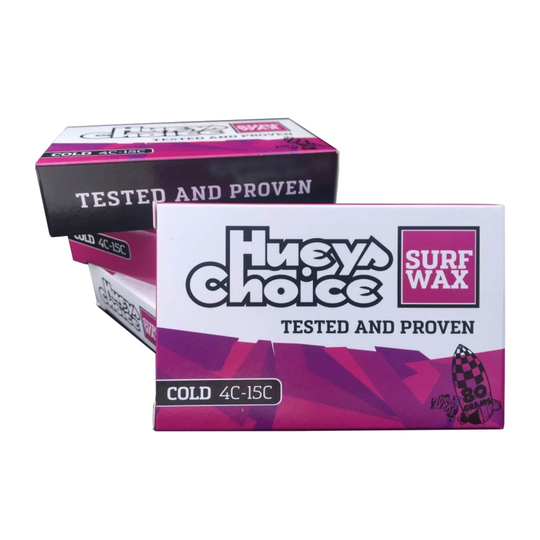
Surf wax is made in different hardnesses for different water temperatures. Most packs are labelled with a temperature range, so check it before you buy. Common types include:
- Base coat: a hard wax that forms the foundation of your grip.
- Cold water wax: softer and tackier, made for cold conditions.
- Cool water wax: for mid-range temperatures.
- Warm and tropical wax: harder waxes that do not melt in warm water and sun.
Using a wax that is too hard for cold water means it will not grip well, while wax that is too soft for warm water turns into a sticky mess. For most of the year in Ireland, cold water wax is the one you will reach for, with cool water wax for the warmest summer days. Browse our surfboard wax selection to find the right one.
How to Apply Wax Step by Step
You will need a base coat, a top coat for your water temperature and a wax comb.
- Start with a clean, dry board. Wax will not stick properly to a wet or dusty surface.
- Apply the base coat. Rub the wax lightly over the deck where your feet and chest will go, using small circles or a criss-cross pattern. Use the edge of the bar rather than the flat side, and do not press too hard. You want small bumps to form.
- Build up the bumps. Keep going until you have an even layer of small beads across the area.
- Add the top coat. Apply your temperature wax over the base coat in the same way. The softer top coat sticks to the bumps and gives you the tacky feel you need.
- Comb it. Run the edge of a wax comb across the wax in a criss-cross pattern to roughen it up.
On a shortboard, wax from the tail pad area up to just past where your chest sits when paddling. On a longboard, many surfers wax most of the deck so they can walk the board.
Keeping Your Wax Fresh
Wax does not last forever. It picks up sand and dirt, flattens out and loses its grip over time. Between sessions:
- Rub a little fresh top coat on before you paddle out.
- Use your wax comb to rough up flattened areas.
- Keep your board out of direct sun and hot cars, as wax can melt and spread.
- Store your board in a bag to keep dirt off the deck.
Stripping Old Wax
Every so often, it is worth removing all the old wax and starting fresh. Leave the board in the sun for a few minutes or use warm water to soften the wax, then scrape it off with the flat edge of your wax comb. Wipe off any remaining residue with a cloth and a little coconut oil or a wax remover made for surfboards. Let the board dry, then apply a new base coat and top coat.
A well-waxed board is one of the simplest ways to surf with more confidence. For more ways to keep your board in good shape, read our surfboard care tips.